
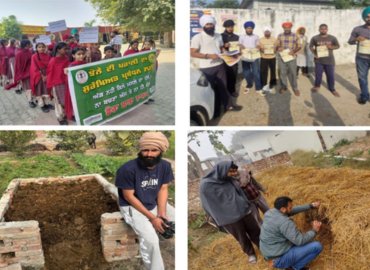
 In a significant step toward sustainable agricultural waste and stubble management FFCT successfully mobilised approximately 11,600 farmers across 180 villages in the Gurdaspur district during 2025–26 under its Crop Residue Management Project. The initiative spanned five blocks of Gurdaspur and led to the diversion of nearly 130,880 tonnes of crop residue from open burning, covering an area of 26,176 hectares. This large-scale intervention significantly contributed to reducing air pollution while promoting sustainable alternatives for crop residue management.
A key driver of this success was the implementation of intensive IEC activities across all 180 villages, to encourage farmers to adopt productive uses of crop residue instead of burning.
The community-centric approach not only created strong awareness at the grassroots level but also fostered behavioural change among farmers. The involvement of schools and youth further amplified the outreach, ensuring that the message of sustainable practices reached households effectively.
This milestone reflects FFCT’s commitment to driving impactful, scalable solutions for environmental challenges and sets a strong precedent for replicating such models in other regions facing similar issues.